

Contact
Mr. Liu: 13396011968
Ms. Xie: 18007226628
Address: No. 3, Development Avenue, New Materials Industrial Park, High-tech Zone, Xiliuhe Town, Xiantao City, Hubei Province

The purity of a metal is relative to its impurities
Published: 2020-09-18
The purity of a metal is relative to impurities. Broadly speaking, impurities include chemical impurities (elements) and physical impurities (crystal defects). Physical impurities mainly refer to dislocations and vacancies, while chemical impurities refer to atoms from outside the matrix that are incorporated into the matrix in substitution or interstitial forms. However, the concept of physical impurities is meaningful only when the metal purity reaches a very high standard (such as metals with a purity of 9N or above). Therefore, in production, the content of chemical impurities is generally used as the criterion for evaluating metal purity, that is, expressed as the percentage of the main metal minus the total content of impurities, commonly represented by the letter "N" (the first letter of "nine"), such as 99.9999% written as 6N, 99.99999% written as 7N.
Currently, there are mainly two ways to represent the purity of high-purity metals: one is to indicate it by the material's application, such as "spectral purity" and "electronic grade purity", etc.; the other is to indicate it by a certain characteristic, such as the carrier concentration of semiconductor materials, that is, the number of impurities that play a conducting role in 1 cubic centimeter of the matrix element, and metals are mainly represented by residual resistivity RRR and purity grade R for purity.
With the improvement of material processing technology, the purity of metals is constantly increasing, but it is impossible to prepare absolutely pure metals. The terms "high purity" and "ultra-purity" have relative meanings, referring to the standards achieved technologically. Due to the development of science and technology, the standards of "high purity" and "ultra-purity" are constantly upgrading. For example, in the past, the impurities of high-purity metals were at the ppm level (that is, a few millionths), and the impurities of ultra-pure semiconductor materials were at the ppb level (a few billionths), while now they have gradually developed to be represented by ppb level (a few billionths) and ppt level (a few trillionths). At the same time, the difficulty of purifying different metals varies, such as in semiconductor materials, 9N or above is considered high purity, while for refractory metals, reaching 6N is already considered ultra-high purity.
- Previous: Common film str...
- Back
-
Next: None
-
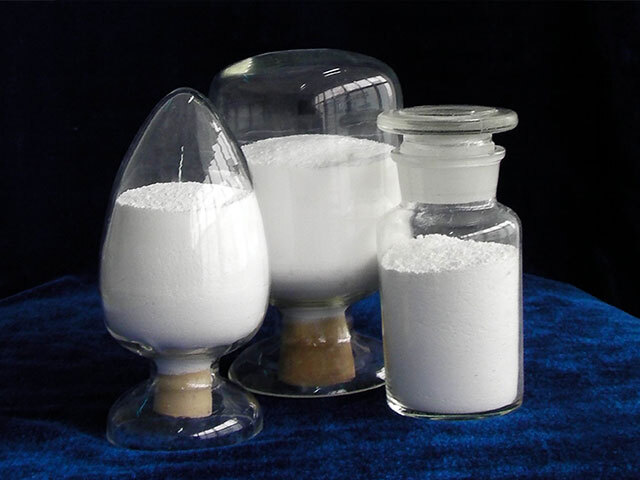
High-purity, electronic-grade, nanoscale barium carbonate
Barium carbonate
CAS:513-77-9
-
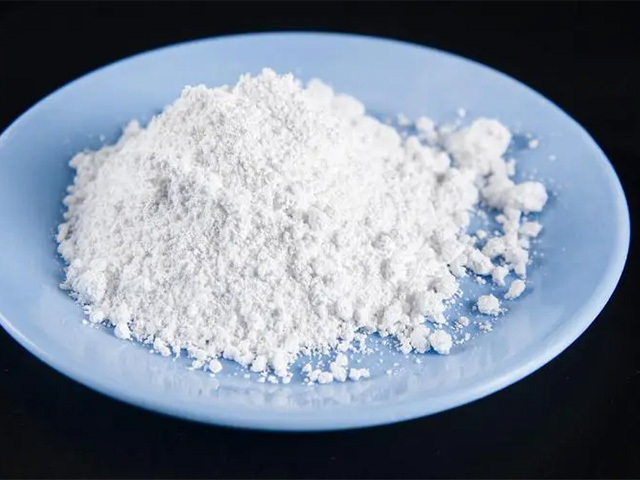
High-purity, electronic-grade, nanoscale strontium carbonate
Strontium carbonate,nanometre
CAS:1633-05-2;1633-55-2
-
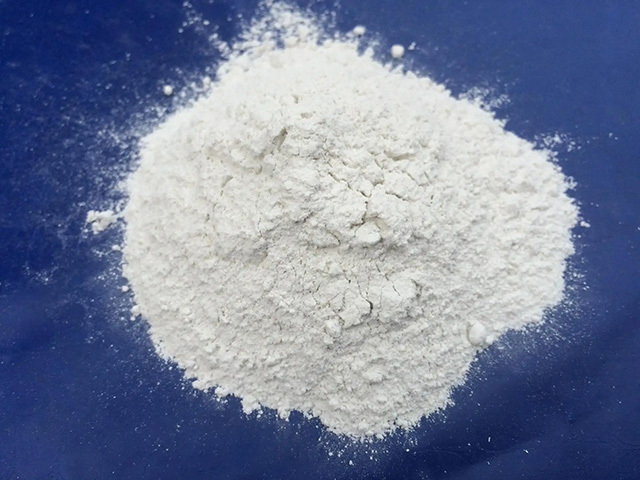
High-purity, electronic-grade, nanoscale calcium carbonate
Calcium carbonate
CAS:471-34-1
-
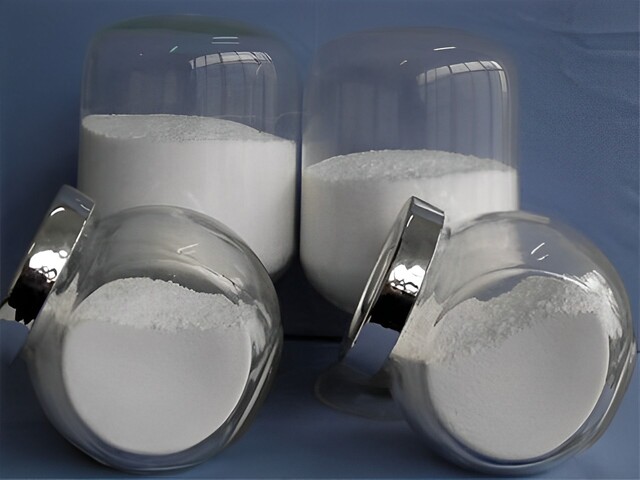
High-purity, electronic-grade, nanoscale titanium dioxide
Titanium(IV) oxide
CAS:13463-67-7
Contact Us

Mr. Liu: 13396011968
Ms. Xie: 18007226628
Address: No. 3, Development Avenue, New Materials Industrial Park, High-tech Zone, Xiliuhe Town, Xiantao City, Hubei Province
Email: lhx@hbzptech.com
Website: www.hbzptech.com
Product Center
High-purity, electronic-grade, nanoscale barium carbonate
High-purity, electronic-grade, nanoscale strontium carbonate
High-purity, electronic-grade, nanoscale calcium carbonate
High-purity, electronic-grade, nanoscale titanium dioxide
High-purity strontium chloride
Copyright(C)2026, Hubei Zhanpeng Electronic Materials Co., Ltd. All Rights Reserved. Supported by ChemNet ChinaChemNet Toocle 31fabu Copyright Notice ICP: 鄂ICP备80000212号-1