

Contact
Mr. Liu: 13396011968
Ms. Xie: 18007226628
Address: No. 3, Development Avenue, New Materials Industrial Park, High-tech Zone, Xiliuhe Town, Xiantao City, Hubei Province

Preparation method of metal powder - physical and chemical method
Published: 2020-09-18
Reduction method:
The reduction method of metal oxides and salts is the most widely used powder preparation method. Solid carbon can be used to reduce iron powder and tungsten powder, and hydrogen or decomposed ammonia can be used to produce tungsten, molybdenum, iron, copper, cobalt, nickel, etc. powders; conversion of natural gas and coal gas can be used to produce iron powder, etc., and metals such as sodium, calcium, magnesium can be used as reducing agents to produce rare metal powders such as tantalum, niobium, titanium, zirconium, thorium, uranium, etc. The basic principle of the reduction method of metal oxides and salts is that the reducing agent has a greater affinity for oxygen than the oxides and the corresponding metals in the salt, so it can seize the oxygen in the metal oxides or salts and reduce the metal. Due to the different effects of different metal elements on oxygen, the stability of the oxide is also not the same. The stability of the oxide can be characterized by the value of ΔG during the oxidation reaction. If the value of ΔG is smaller during the reaction process, it indicates that the oxide is more stable and has a greater affinity for oxygen.
Its advantages are simple operation, easy control of process parameters, high production efficiency, low cost, and suitability for industrial production; its disadvantages are only applicable to metals that can react with hydrogen and become brittle and prone to fragmentation after hydrogen absorption.
Metal thermal reduction and reduction method:
Metal thermal reduction is that the reduced raw materials can be solid, gaseous, or molten salt. The latter two have the characteristics of gas-phase reduction and liquid-phase precipitation. The commonly used metal thermal reduction agent methods in industry include: using calcium to reduce TiO2, ThO2, UO2, etc.; using magnesium to reduce TiCl4, ZrCl4, TaCl5, etc.; using sodium to reduce TiCl4, ZrCl4, K2ZrF6, K2TaF7, etc.; using calcium hydride (CaH2) to co-reduce chromium oxide and nickel oxide to produce nickel-chromium stainless steel powder.
Reduction method:
The reduction method refers to the method of obtaining carbides, borides, nitrides by the reaction of carbon, boron carbide, silicon, nitrogen with refractory metal oxides.
Electrolysis method:
The electrolysis method is a method of causing metal powder to deposit and precipitate at the cathode by electrolyzing molten salt or the aqueous solution of salts. The electrolysis method can be used to produce all metal powders, and is particularly suitable for producing copper powder, silver powder, and tin powder. Electrolysis powder production can be divided into electrolysis of aqueous solution, organic electrolyte electrolysis, molten salt electrolysis, and liquid metal cathode electrolysis.
Its advantages are that the produced metal powder has a high purity, and the purity of elemental powder can reach over 99.7%; in addition, the electrolysis method can well control the particle size of the powder and produce ultra-fine powder. However, the electrolysis method consumes a large amount of electricity and has a high production cost. Electrolyzing an aqueous solution can produce metal powders such as Cu, Ni, Fe, Ag, Sn, Fe-Ni, Fe-Co, Ni-Co, etc., and electrolyzing molten salt can produce metal powders such as Zr, Ta, Ti, Nb.
Hydroxyl method:
Some metals (such as iron, nickel, etc.) are combined with carbon monoxide to form metal carbonyl compounds, and then heated to decompose into metal powder and carbon monoxide. The obtained powder is very fine and of high purity, but the cost is high. Industrially, it is mainly used to produce fine and ultra-fine powder of nickel and iron, as well as alloy powders such as Fe-Ni, Fe-Co, Ni-Co.
Chemical substitution method:
The chemical substitution method is to use a more active metal to replace a less active metal from the metal salt solution, and the obtained metal (metal powder particles) is further processed and refined by other methods. This method is mainly used for the preparation of Cu, Ag, Au, etc. non-reactive metal powders.
- Previous: Three more comp...
- Back
-
Next: Infrared film p...
-
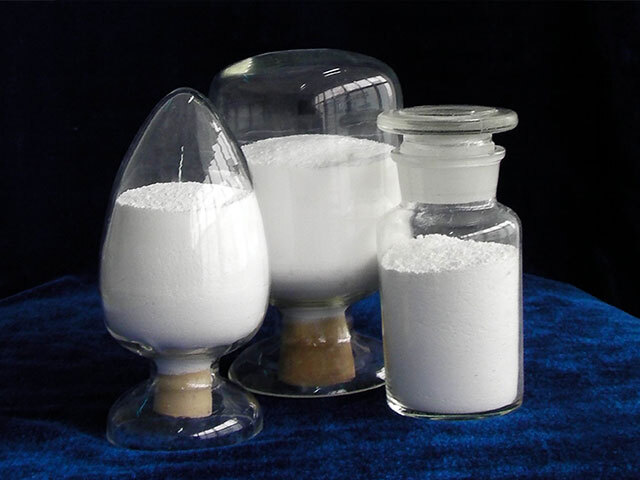
High-purity, electronic-grade, nanoscale barium carbonate
Barium carbonate
CAS:513-77-9
-
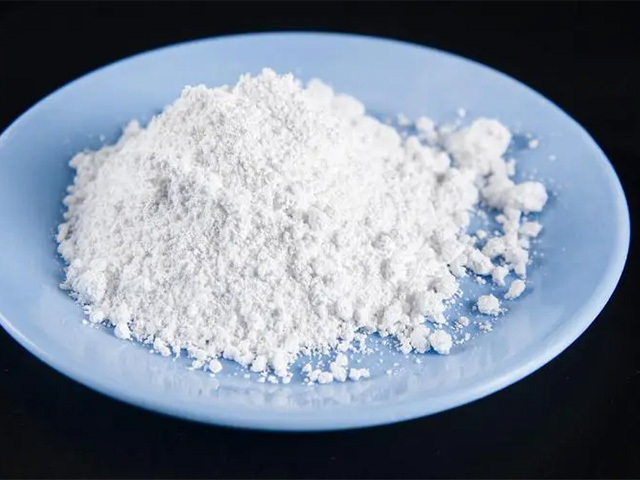
High-purity, electronic-grade, nanoscale strontium carbonate
Strontium carbonate,nanometre
CAS:1633-05-2;1633-55-2
-
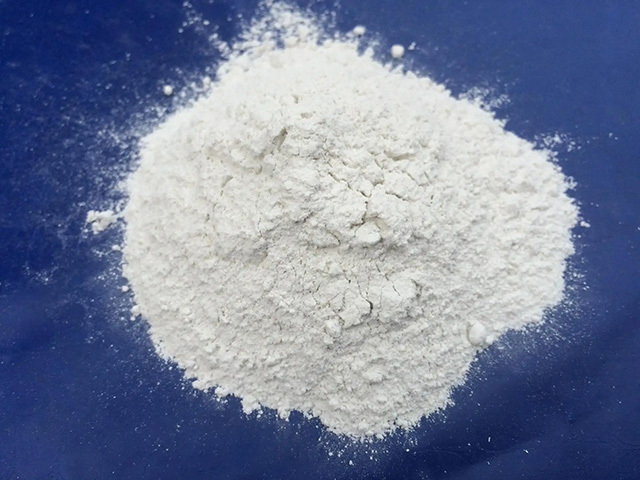
High-purity, electronic-grade, nanoscale calcium carbonate
Calcium carbonate
CAS:471-34-1
-
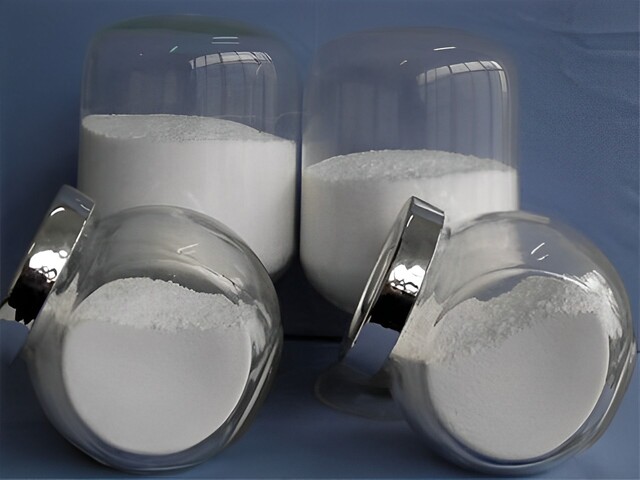
High-purity, electronic-grade, nanoscale titanium dioxide
Titanium(IV) oxide
CAS:13463-67-7
Contact Us

Mr. Liu: 13396011968
Ms. Xie: 18007226628
Address: No. 3, Development Avenue, New Materials Industrial Park, High-tech Zone, Xiliuhe Town, Xiantao City, Hubei Province
Email: lhx@hbzptech.com
Website: www.hbzptech.com
Product Center
High-purity, electronic-grade, nanoscale barium carbonate
High-purity, electronic-grade, nanoscale strontium carbonate
High-purity, electronic-grade, nanoscale calcium carbonate
High-purity, electronic-grade, nanoscale titanium dioxide
High-purity strontium chloride
Copyright(C)2026, Hubei Zhanpeng Electronic Materials Co., Ltd. All Rights Reserved. Supported by ChemNet ChinaChemNet Toocle 31fabu Copyright Notice ICP: 鄂ICP备80000212号-1